

cross-posted from: https://lemmy.sdf.org/post/46377338
Opinion piece by Li Qiang, founder and executive director of China Labor Watch, and a human rights advocate with over 30 years of experience investigating global supply chains.
[…]
China’s low rights model is no longer a domestic labor issue but a systemic challenge to global labor standards, supply chain governance, and fair market competition. Without a coordinated civil society response, the global baseline for worker rights will continue to fall.
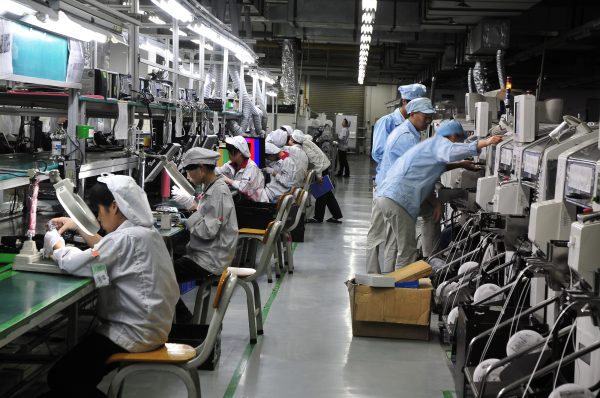
I call China’s economic model a “low rights” one because it has long relied on suppressing labor costs to maintain industrial competitiveness. As a result, trade imbalances between China, the United States, and Europe are strategically linked to China’s ability to attract multinational companies through low-cost labor and policy incentives. At the same time, Chinese companies internalized the technology and management know-how of these foreign companies into their domestic systems, gradually transforming what were originally Western competitive advantages into China’s own strengths.
[…]
In recent years, China’s “low-standard, low-cost” development model has expanded beyond its borders. Through the Belt and Road Initiative, it has spread globally, exporting labor, environmental, and governance risks to host countries. Nowhere is this more evident than in Indonesia’s nickel sector, where mining and smelting contracts are so short that they function like countdown clocks, pressuring companies to recoup capital as fast as possible.
[…]
This “low-cost” model has been permitted to exist due to an increasingly shrinking civic space. Independent labor monitoring inside China has become dramatically harder in the past decade. Today, only a few independent organizations remain capable of conducting investigations, such as China Labor Watch. Yet, political risks deter most international funders from supporting work inside China, leaving independent oversight critically under-resourced in an area where it is needed most.
[…]
To counter this dynamic, civil society organizations must be central to any strategy for raising global labor standards. We can advance change in three key ways.
First, increase public awareness. We can collectively highlight that consumers must recognize the real costs behind low-priced products: long working hours, low pay, job displacement, low labor standards. The public must understand that declining labor standards ultimately harm every society. In reality, with wages stagnating in many Western countries, more consumers rely on cheaper products that are produced by workers who are, in fact, competing with them for similar types of jobs in the global labor market.
Second, advocate and partner with authorities for the rigorous enforcement of forced-labor laws. Import bans, labor regulations, and due diligence laws already exist. But enforcement depends on independent organizations holding authorities accountable, and providing evidence if there are enforcement gaps. It also requires sufficient and sustained funding to ensure that these laws can be implemented in practice, rather than remaining symbolic commitments.
[…]
The EU Forced Labor Regulation and the Corporate Sustainability Due Diligence Directive (CSDDD) had their scope narrowed during the legislative process, while U.S. forced labor import enforcement remains inconsistent and lacks clear direction, making the global regulatory landscape by significant uncertainty. If global civil society does not intervene now, global labor standards will not simply stagnate; they will be redefined downward by a model built on speed, opacity, and the suppression of rights.
[…]
China is a brand new type of socialism, one that Marx couldn’t ever hope to write about, as that would have needed him to go through many important moments of world history (great wars, nuclear development, age of information…) that he could never have predicted. China in the 50s was an agrarian/third world nation, after the CCP took over their plan was simple: “Muster the strength of the entire population to push China into a new age through carefully planned country-wise economic strategies”. It’s a different perspective when compared to western capitalist societies that value individual freedom above the well-being of the nation, their idea was to value the nation above everything and everyone. To sacrifice generations in favor of economic development, to turn weakness, a poor country with more people than it could feed, into strength, a country where labor was so cheap it became the perfect trap to steal the advantages the first-world had developed: industries. Now, the western world has lost all of its advantages, they no longer have manufacturing capabilities that are enough even to supply their own demand, and its final advantage, technological supremacy slowly slips away from their hands. All that they have left is a class of uber-billionaires more than willing to sacrifice entire nations just so they can buy another yacht. Meanwhile, western media points their finger and exclaims: “Inhuman! The Chinese are using their own people to steal our western jobs with cheap labor!!!”, and Liberals left and right look down from their “moral superiority” seat of ignorance and agree, calling the chinese the evil masterminds of the century for daring to not (EDIT: word order) have their same views that valuing individual freedom as a divine natural right, as said Locke, is the only correct moral path, and anything else is Evil wrought upon this world. Thus, they fail to see that, although indeed Machiavellian-looking, valuing the community, the society, above the individual is exactly where the true left had always resided. What good is personal freedom when a man can buy another? And do not mistake me, I do not claim their methods to be flawlessly, they are indeed ruthless, but the Chinese Government can most certainly be conferred the title of “efficient”, in a few decades they took a country from the throngs of poverty and the past and pushed it forward, with sacrifices indeed, to the forefront of modern development. Are they truly wrong? Would you prefer they’d stuck to being slaves of first-world countries? As someone who does live in a third world, developing country, as they say, I’d be very very glad to see the same mentality of my own government, I’d sacrifice myself gladly to hope for a better future for the next generations. Instead, all I get is the proverbial choice of working my whole life to not starve to death while making a garbage human billionaire hiding in a mansion somewhere richer and richer at the cost of the people, all while my country not only barely inches forward in quality of life, but is constantly shoved back down the mud by the actions of western interests, that easily stoop to all the tricks of the CIA handbook just to keep us too busy too see that the evil wears not red, but blue and stars.
You wrote a lot to not say much, China’s ‘new brand of socialism’ is just state run capitalism. Don’t get me wrong, they have achieved a lot and modern china is very impressive, Id like to visit one day. Still ain’t communist, and the ccp knows this, they just like the branding.